Misfits, Scratches, and Stories: Why Flaws Make Better Heroes
In the world of storytelling, we are often drawn to perfection—the flawless hero who has no visible imperfections and always seems to have everything figured out. But the most compelling and human stories come from the imperfect, the broken, and the misfits. These characters, marked by their scars and flaws, carry something deeper than mere physical beauty: they have heart. They have lived experiences that make them relatable, and most importantly, they are survivors.
One of the best examples of this kind of character can be found in Perry F. Sagliocco’s The Life of Ric McFlicker, where the story revolves around lighter objects far from perfect but full of life, heart, and resilience. These lighters, worn down by time and use, are far from ordinary. Their dents, cracks, and imperfections tell stories of their past, and in doing so, they become symbols of strength and survival. It’s a narrative that celebrates the beauty of imperfection, showing readers that flaws aren’t weaknesses; they are badges of lived experience.
The Imperfect Heroes of the Basement
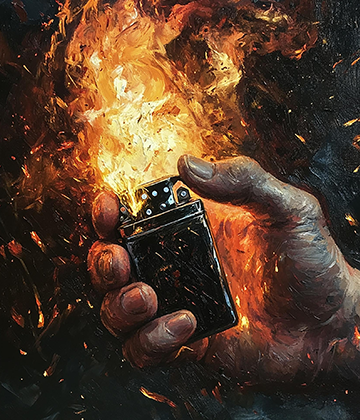
Ric McFlicker, the protagonist of the story, is not your typical hero. He’s a lighter, worn out from years of service, no longer possessing the shine or the flicker he once had. He’s been discarded into a basement, surrounded by other lighters just like him. Some are missing their caps, others have broken parts, and many have faded with age. Yet, it’s precisely these imperfections that make them who they are. They are survivors in a world that constantly replaces the old with the new, showing that even when broken, they still have purpose.
The basement is a metaphorical haven for the misfits, the forgotten, and the discarded. These lighters, once valued and used daily, now sit together as a group of misfits, each with a tale to tell. The cracks in their casings, the dents in their bodies, and the wear on their igniters are physical representations of their lived experiences. These marks are not signs of weakness; they are badges of resilience. Every scratch, every chip tells a story of survival, of being used and tossed aside, and yet continuing to exist despite it all.
Take Zip, for instance, a World War II veteran among the lighters. His body is battered, yet his flame still burns strong. He’s been through worse, and that strength comes from his imperfections. Or consider Coleen, who has a crooked lid from an unfortunate accident, yet she still carries herself with pride, her stories bringing joy to the group. Each of these characters, with their scars and flaws, has a depth that a perfect, untouched hero would lack.
Flaws as Symbols of Resilience
In Ric McFlicker’s world, imperfections are what make the characters stand out. These lighters aren’t just tools; they are vessels of history, of trials faced and overcome. A perfect lighter might be nice to look at, but it’s the ones that have been through the wringer, the ones that have lived, loved, and lost, that truly resonate with us.
The scratches and cracks on Rick and his companions’ bodies symbolize their ability to withstand the passage of time. Every dent in their surfaces represents a moment they’ve survived, a challenge they’ve faced. These imperfections show that they’ve lived long enough to experience the highs and lows of existence, and that they’ve emerged from it stronger. This is the very essence of what makes them heroes—they have faced adversity and come out the other side, not perfect, but better for it.
Consider the moment when Rick, once a proud and perfect lighter, faces his own fall from grace. His flame flickers out, and he is tossed aside, feeling obsolete and replaced. But it’s in this moment of brokenness that Rick’s true heroism begins to shine through. It’s not his perfection that defines him; it’s his will to keep going, his refusal to stay down. His journey of redemption, of learning to embrace his imperfections, is what makes him a true hero. His story is about resilience, about finding strength even when everything seems lost. It’s a celebration of the idea that it’s not our flaws that define us, but how we carry them.
The Power of Stories and Connection
What makes Rick and his fellow basement lighters so compelling is the power of their stories. They come together in the basement not just to survive, but to share their experiences. Each of them has a tale to tell, a moment in their life that has left them marked. And as they tell these stories, they form connections, finding strength in their shared history.
Something is compelling about hearing someone else’s story—especially one that mirrors our own. It’s in those moments of vulnerability that we connect with others. We see ourselves in their struggles, their triumphs, and their flaws. The lighters in The Life of Ric McFlicker understand this deeply. Their imperfections are not just physical; they are emotional and psychological. The stories they share help them heal, give them purpose, and, ultimately, allow them to rediscover their worth.
For Rick, his journey is not just about finding the elusive Golden Fluid that can restore his flame. It’s about reconnecting with who he is, embracing his flaws, and finding meaning in his existence once more. Through his experiences and the stories he shares with others, he realizes that he’s more than just a broken object—he’s a hero, imperfect and flawed, but full of heart and strength.
Why We Love Flawed Characters
The truth is, we love flawed characters because they remind us of our own humanity. We all have our cracks, our dents, our imperfections. Yet, it’s these very imperfections that make us unique. They shape who we are, define our experiences, and give us the strength to keep moving forward. In a world that often glorifies perfection, stories like The Life of Ric McFlicker remind us that it’s the misfits, the broken, and the imperfect that have the most to offer.
These characters show us that flaws are not something to be ashamed of. They are part of our story, part of our journey. And just like the lighters in the basement, we too can find strength in our imperfections. It’s not the smooth, flawless surface that makes us valuable; it’s the fire within us, the will to keep going, the courage to rise after every fall.
In the end, The Life of Ric McFlicker is a celebration of the misfits, the scratches, and the stories that make us who we are. It’s a powerful reminder that the most damaged characters often have the most heart, and that is what makes them the truest heroes of all.